I arrived in Marseille in November 2025 as part of the IMBRACE project, a European Research Council-funded study exploring how climate vulnerability intersects with migration and health in European cities.
There, I work closely with CHO3 (collectif des Habitants Organisés du 3ème), a neighbourhood association deeply involved in local organising. Our work in the city is also supported by Marine Caleb, a freelance journalist collaborating with us on the project.


Despite its long-standing reputation as a “poor, dirty, dangerous city”, Marseille is in fact a vibrant, diverse, and beautiful city. The negative image stems partly from decades of neglect and underinvestment by public authorities, and partly from racist attitudes that treat the city’s racial and ethnic diversity as a threat to idealised notions of what a French city should be. Headlines focusing on crime, poverty, and corruption have often overshadowed the wider causes behind these issues, as well as the deep inequalities affecting the city.
Just as importantly, these narratives hide the activism, solidarity, and dynamism at the heart of Marseille’s communities – forces that are central to how the city keeps growing and reinventing itself.

How the Rue D’aubagne exposed housing neglect
On the morning of 5 November 2018, two residential buildings at 63-65 Rue d’Aubagne, in the heart of central Marseille, collapsed. Eight people died. The disaster exposed decades of underinvestment in housing, including the wilful neglect of unsafe buildings, and revealed deep social, economic and racial inequalities within the city.
In the aftermath, it emerged that several political figures had direct links to the buidlings involved: an elected member of the regional council owned a flat in one of the collapsed buildings and had also served as the management company’s lawyer. Two other elected officials were found to be renting out unsafe housing in the 3rd district.
The tragedy galvanised Marseille’s urban social movements, most visibly through the Collectif 5 novembre. It contributed to a major political shift: After 25 years under the right-wing Mayor Jean-Claude Gaudin, the left-wing alliance Printemps Marseillais won the 2020 local elections. Benoît Payan became mayor and was re-elected in the March 2026 local elections.
One lasting consequence of the collapse has been the large-scale displacement of residents from buildings deemed structurally at risk. Within two weeks, around 1,500 people were evacuated and 193 buildings were emptied. By 2022, that figure had risen to over 6,000 displaced residents, and numbers continue to climb. Many scholars and local activists argue that the arrêtés de péril (official orders used to evict residents based on building risk assessments) are being used to push poorer residents out of the city centre, and accelerating gentrification under the guise of public safety. Victor Collet’s 2024 book Du Taudis au Airbnb – Petit Histoire des Luttes Urbaines à Marseille gives a thorough account of these political upheavals.

Belle-de-Mai: Neglected, Not Passive
“Belle de Mai, the poorest neighbourhood in France”
“Poverty as a breeding ground for violence”


These headlines, common in coverage of Belle-de-Mai, capture only a partial reality. The 3rd district, where Belle de Mai is located, has a poverty rate of 53.5%, and 45% of its population is classified as inactive. Housing conditions are also extremely degraded, with around 65% of the housing stock considered insalubre (substandard or uninhabitable). These figures reflect long-term public disinvestment, visible in poor housing conditions, limited transport, and a lack of public services and spaces.
A 2023 report by Action contre la Faim and the Belle de Mai Rights Access Collective (CAD) highlights the specific experiences of migrants in the nieghbourhood, including: lack of access to rights and essential services, inadequate access to safe housing, and the deep links between precarity and mental health.
But this is only a partial narrative. Belle-de-Mai is also home to a dense network of associations and collectives that sustain everyday systems of support, solidarity and political mobilisation.
As one resident told La Provence:
“People here may have little money, but this neighbourhood is rich in solidarity and cultural diversity. There is poor housing, violence, dirtiness… but the bonds between residents are incredible. We wouldn’t leave Belle-de-Mai for anything in the world.” La Provence

Urban Transformation and Its Tensions
Several major urban projects are underway in and around Belle-de-Mai. In 2019, the Métropole Aix-Marseille-Provence, the City of Marseille, and the French state signed the Projet Partenarial d’Aménagement (PPA), a renewal scheme for the expanded city centre. Its stated goals include tackling substandard housing, restoring built heritage, improving residential quality, and enabling existing residents to remain in their neighbourhoods.
A major extension of the tramway is also in progress. It aims to address the neighbourhood’s longstanding lack of public transport, and is framed as part of broader regeneration efforts. While tackling long-standing transport isolation, the project also involves opening up large avenues, demolishing existing homes, and important changes to the character of streets. This has generated conflicts between institutions and concern among residents. The collective “Qu’est-ce qui s’Tram ?” has mobilised around this project.
Residents and collectives broadly welcome investment. However, inhabitants also fear that these projects may drive displacement and deepen inequalities.


Grassroots Mobilisation in Belle-de-Mai
Transport rights for undocumented migrants
In 2021, after 15 months of sustained campaigning led by CHO3 and its partners, around 13,000 beneficiaries of state medical aid (AME), mostly undocumented migrants, secured a 50% reduction on public transport fares in the metropolis. The campaign forced compliance with the 2000 Solidarity and Urban Renewal (SRU) law, which had been ignored for years. Before the change, high ticket prices, police checks, and fines made public transport a source of fear and exclusion.
The Jardin Levat: a green space under negotiation
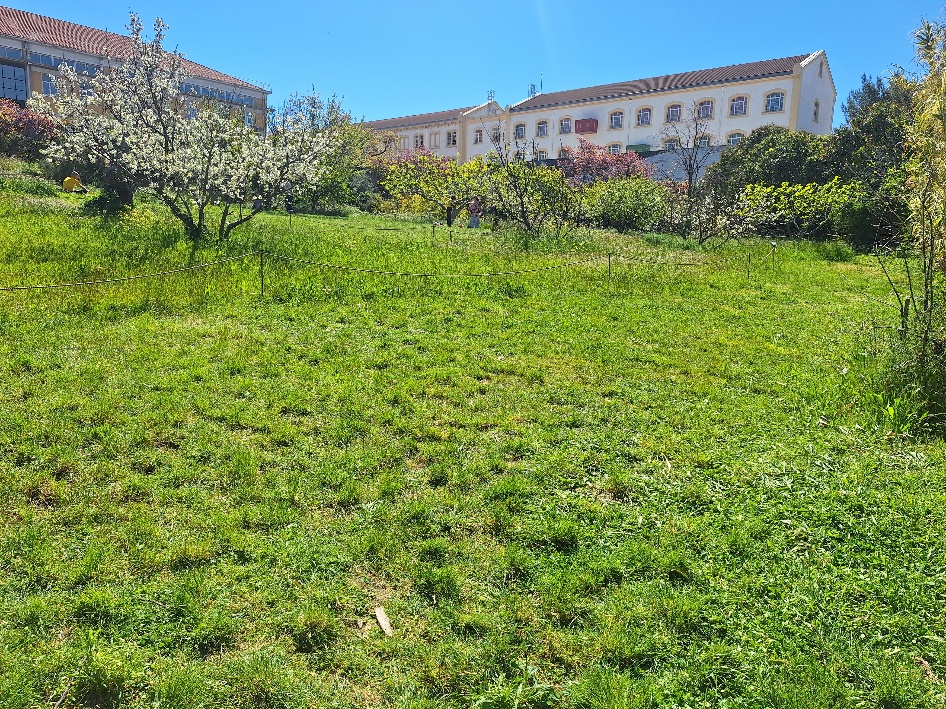
The Levat site is a former convent covering 1.7 hectares in Belle-de-Mai. It includes a 15,500m² garden and a 2,500m² building that has belonged to the City of Marseille since 2017. Two organisations currently manage the site under temporary agreements: Juxtapoz, which runs a space for artistic creation and production, and L’Hydre, which manages the garden. Both agreements expire in December 2026, and neither organisation plans to renew.
Residents, neighbourhood associations, and collectives have responded by forming the Association L.E.V.A.T. Their goal is to ensure the future of the site is decided in a democratic and inclusive way, rooted in existing uses and expressed needs. They propose turning Levat into a commons: an open space for ecology, culture, popular education, care, and solidarity. They are asking the city to co-produce the future of the site with those already present, instead of opening a competitive call for projects.
Access to rights and services
Across the neighbourhood, a network of associations continues to mobilise to improve access to rights and essential services. CHO3 works on housing rights and mobility, and runs a catering business whose profits fund a local food bank. Association En Chantier promotes affordable, healthy food through workshops, weekly low-cost meals, and community allotments. On le Fait Pour Nous, Toutes et Tous Ensemble, and Mot à Mot run campaigns on migration, healthcare, education, and food security.
These initiatives are how residents assert their right to the city, create systems of care, support and political mobilisation, and therefore also contribute to reducing climate impacts in their daily lives.
What Our Research Is Exploring
Our work in Belle-de-Mai focuses on how climate vulnerability intersects with migration and health. Climate vulnerability is not simply a matter of weather. It is socially produced through housing conditions, employment status, migration status, access to healthcare, experiences of racism and discrimination, and urban and climate policies that take into consideration, or not, the needs of the cityºs diverse communities.
We are working to answer two questions:
- Why are migrants from the Global Majority disproportionately affected by climate impacts?
- What strategies and knowledge do migrants themselves draw on to adapt to heat, flooding, and other climate extremes?
We have completed in-depth interviews with migrants and key informants, and run photovoice and body-mapping workshops with CHO3 members. In the coming months, we will conduct walkabouts through the neighbourhood and work with CHO3 to connect research findings to the needs of local collectives.
____
This piece was written from field notes gathered in Belle-de-Mai, Marseille, between November 2025 and May 2026.